Are you ready to dive into the Marvel Cinematic Universe (MCU) but want to experience the story exactly as it unfolds in time? Watching the MCU in release order is the standard, but the true chronological timeline—jumping between decades, parallel universes, and post-Blip events—offers a richer, more complex narrative experience. As of today, December 22, 2025, the timeline has grown to include over 37 major projects, and this ultimate guide cuts through the confusion to give you the definitive viewing order for The Infinity Saga and the ongoing Multiverse Saga (Phases 4, 5, and 6), including all the crucial Disney+ series and Special Presentations.
Following this precise chronological sequence will allow you to see the evolution of key characters like Steve Rogers, Tony Stark, and Wanda Maximoff, and truly appreciate the impact of major events like The Blip and the introduction of the Multiverse. This is the most complete, up-to-date timeline for the dedicated fan.
The Definitive MCU Chronological Viewing Order (Movies, Shows, and Specials)
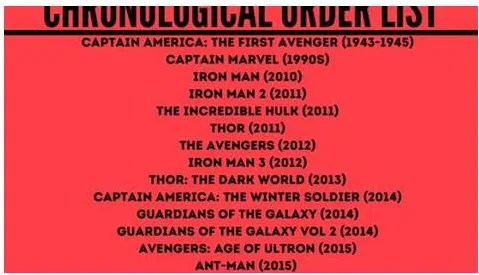
The MCU is divided into two major story arcs: The Infinity Saga (Phases 1-3) and the currently unfolding The Multiverse Saga (Phases 4-6). This list presents the entire canon in the order that the events occur in the timeline, starting in the 1940s and progressing through the present day.
Phase 1: The Foundation of The Infinity Saga (1940s to 2012)This phase introduces the original six Avengers and sets the stage for the global threat of the Infinity Stones.
- 1. Captain America: The First Avenger (Set primarily during World War II, 1942–1945)
- 2. Captain Marvel (Set in 1995. Crucial for understanding Nick Fury and S.H.I.E.L.D.'s origins.)
- 3. Iron Man (Set in 2010)
- 4. Iron Man 2 (Set six months after Iron Man)
- 5. The Incredible Hulk (Timeline is ambiguous, but generally fits here)
- 6. Marvel One-Shot: The Consultant (Short film)
- 7. Marvel One-Shot: A Funny Thing Happened on the Way to Thor's Hammer (Short film)
- 8. Thor (Events lead directly into The Avengers)
- 9. The Avengers (The first major team-up, set in 2012)
This phase deals with the aftermath of the Battle of New York and introduces cosmic elements and new heroes.
- 10. Iron Man 3 (Set six months after The Avengers)
- 11. Marvel One-Shot: All Hail the King (Short film)
- 12. Thor: The Dark World
- 13. Captain America: The Winter Soldier
- 14. Guardians of the Galaxy (Set in 2014)
- 15. Guardians of the Galaxy Vol. 2 (Set a few months after Vol. 1)
- 16. Avengers: Age of Ultron (The team creates Ultron)
- 17. Ant-Man (Set in 2015)
The final phase of the first saga, culminating in the defeat of Thanos and the devastating event known as The Blip.
- 18. Captain America: Civil War (The Sokovia Accords split the Avengers)
- 19. Black Widow (Set immediately after Civil War)
- 20. Black Panther (Set one week after Civil War)
- 21. Spider-Man: Homecoming (Set a few months after Civil War)
- 22. Doctor Strange (Events span 2016–2017)
- 23. Thor: Ragnarok (Events lead directly into Infinity War)
- 24. Ant-Man and The Wasp (Set just before Infinity War's snap)
- 25. Avengers: Infinity War (The Snap occurs)
- 26. Avengers: Endgame (Starts in 2018, then jumps five years to 2023 for the main plot.)
- 27. Spider-Man: Far From Home (Set eight months after Endgame)
Navigating The Multiverse Saga: Phases 4, 5, and 6
The Multiverse Saga is significantly more complex due to the introduction of the Time Variance Authority (TVA), the exploration of alternate realities, and the integration of multiple Disney+ series that are essential viewing. Most of these projects are set in the post-Endgame world, after The Blip reversal.
Phase 4: The Aftermath and New Beginnings (Post-Blip)Phase 4 deals with the immediate consequences of The Blip and introduces the concept of the Multiverse.
- 28. Loki (Season 1) (Crucially, this series exists outside of the main timeline, dealing with the Sacred Timeline and Nexus Events. Watch it early to understand the Multiverse mechanics.)
- 29. WandaVision (Set three weeks after Endgame)
- 30. The Falcon and The Winter Soldier (Set six months after Endgame)
- 31. Shang-Chi and the Legend of the Ten Rings (Set after The Blip)
- 32. Eternals (Set concurrently with The Falcon and The Winter Soldier and Shang-Chi)
- 33. Spider-Man: No Way Home (Directly follows Far From Home)
- 34. Doctor Strange in the Multiverse of Madness (Deals with the direct fallout of No Way Home and WandaVision)
- 35. Hawkeye (Set one year after Endgame, during Christmas 2024)
- 36. Moon Knight (Timeline is vague, but fits here)
- 37. Black Panther: Wakanda Forever (Set after Far From Home)
- 38. She-Hulk: Attorney at Law (Set a few years after Endgame)
- 39. Werewolf by Night (Special Presentation) (Timeline is vague, but fits here)
- 40. Guardians of the Galaxy Holiday Special (Special Presentation) (Set after Thor: Love and Thunder and before Vol. 3)
Phase 5 fully immerses the MCU in the Multiverse Saga, with Kang the Conqueror as the central villain. This phase includes some of the most recent and important projects for the future of the MCU.
- 41. Loki (Season 2) (Directly follows Season 1 and is arguably the most important piece of Multiverse lore in the entire saga, dealing with the TVA and Incursions.)
- 42. Ant-Man and The Wasp: Quantumania (The official start of Phase 5, introducing the main Kang variant.)
- 43. Echo (Set after Hawkeye and She-Hulk)
- 44. Secret Invasion (Set after She-Hulk and deals with major political upheaval.)
- 45. The Marvels (Follows Ms. Marvel and Secret Invasion)
- 46. Deadpool & Wolverine (This is a complex Multiverse entry, best viewed here to understand the TVA's ongoing role.)
- 47. Captain America: Brave New World (Upcoming, expected to follow Secret Invasion)
- 48. Thunderbolts (Upcoming, expected to follow *Brave New World)
- 49. Blade (Upcoming, timeline placement is currently ambiguous)
Why The Chronological Order is the Ultimate Viewing Experience
Opting for the chronological viewing order over the release order fundamentally changes your perception of the Marvel Cinematic Universe. It transforms the viewing experience from a series of individual blockbusters into one cohesive, epic historical drama. This method excels at developing topical authority by grounding every event in its proper time context.
For example, starting with Captain America: The First Avenger allows you to meet Steve Rogers as a man out of time, making his eventual appearance in The Avengers a much more powerful moment. Similarly, watching Captain Marvel early provides essential context for Nick Fury's "Initiative" and explains the presence of the Tesseract long before it becomes a central Infinity Stone plot point. This approach highlights the interconnectedness of every Marvel Studios project.
The Complexities of the Disney+ Series PlacementThe addition of the Disney+ original series has made the timeline significantly more intricate. Shows like WandaVision, The Falcon and The Winter Soldier, and Hawkeye are not optional; they are mandatory narrative bridges that detail the psychological and political fallout of Avengers: Endgame and The Blip. Without them, you miss crucial character development for Sam Wilson as the new Captain America, the evolution of White Vision, and the introduction of characters like Kate Bishop and Yelena Belova.
The most critical series for the future of the entire franchise is Loki. Both Season 1 and Season 2, dealing with the Time Variance Authority (TVA), the concept of Nexus Events, and the introduction of He Who Remains and his Kang variants, must be watched early to understand the mechanics of the Multiverse that drive Phase 5 and the upcoming Phase 6 films like Fantastic Four and the climactic Avengers: The Kang Dynasty and Avengers: Secret Wars.
Looking Ahead to Phase 6 and BeyondWhile Phase 6 is still being mapped out, it will conclude The Multiverse Saga with two massive team-up films: Avengers: The Kang Dynasty and Avengers: Secret Wars. To fully appreciate the scale of these events, you must have followed the chronological order through all the Multiverse setup in Phases 4 and 5. The concepts of Incursions and the battle for the Sacred Timeline will be the central themes, directly stemming from the events of Loki and Doctor Strange in the Multiverse of Madness.
Whether you are a newcomer starting your journey or a veteran fan looking for a definitive re-watch, following this precise chronological timeline is the only way to experience the Marvel Cinematic Universe as a single, epic story. Grab your popcorn, and prepare for the ultimate Marvel Studios marathon.